Related Resources
Institutions, networks, projects, and initiatives sharing the ISCSD’s research interests

EANASE serves as a scholarly hub for the academic study of esotericism in East Asia, encompassing traditions such as Daoism, Shugendō, Onmyōdō, Korean shamanism, and other occult or mystical practices. The network aims to promote interdisciplinary research, facilitate cross-cultural dialogue, and support the growing community of researchers in this specialized field.
EANASE has extended the focus established by its predecessor, the Japanese Network for the Academic Study of Esotericism (JNASE), beyond Japan. Thereby, EANASE addresses the recent surge in research on occultism and esotericism in China, Taiwan, and South Korea, reflecting the region’s rich and varied esoteric heritage. The network plays a crucial role in integrating these traditions into the global academic discourse on esotericism.
The European Society for the Study of Western Esotericism is Europe’s leading scholarly society dedicated to the academic study of Western esotericism. As an affiliated society of the International Association for the History of Religions (IAHR) and a related organization of the American Academy of Religion (AAR), the ESSWE fosters research into the diverse expressions of Western esoteric traditions from late antiquity to today. Established in 2002, the society is committed to advancing the field and ensuring its continued growth.
The ESSWE maintains affiliations with a wide-ranging network of related academic associations, among them the East Asian Network for the Academic Study of Esotericism (EANASE), see below.
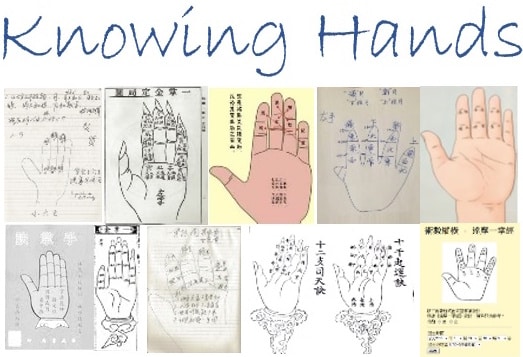
The Knowing Hands project examines in comparative and cross-cultural perspectives unexplored historical and ethnographic material on Chinese hand-based practices. It seeks to understand both how people use their hands to think with by linking 1) hand mnemonics – what the project team terms “epistemic hands” as a form of extended cognition, i.e., how humans use hands to aid cognitive processing; and 2) handy knowledge – “mindful hands” as a form of embodied cognition, i.e., what knowledge is grasped corporeally with hands to do things. For the first time, the project aims to link these two distinct uses of the hand: how do forms of extended cognition observed in epistemic hands inform embodied know-how in mindful hands and vice versa?
“Mapping Occult Sciences Across Islamicate Cultures” (MOSAIC), funded by an ERC Synergy Grant from the European Research Council, is the first major project to investigate Islamic and Eastern Christian occult-scientific sources, spanning from late antiquity to the nineteenth century and from Iberia to India, in a vast continuum of languages (Greek, Syriac, Arabic, Persian, Turkish).
It is generally acknowledged that occult sciences – alchemy, astrology, geomancy, lettrism, magic and other operative and prognosticative disciplines – are integral to any history of science and technology. By including the far larger non-Latinate occult-scientific archive, MOSAIC is poised to bring about a paradigm shift. This dynamic and adaptive heuristic opens new avenues in the study of body-mind, nature-culture relationships and reveals new paths of dissemination and crosspollination of the occult sciences in Islam and Byzantium.
Retrieving occult science will require synergetic expertise, international collaboration and the training of a new generation of scholars. We will (1) identify, investigate, catalogue and interpret highly technical sources, making them available through editions, translations, surveys, studies, exhibitions and conferences; (2) combine the study of scientific theories with their technological practice, including through experimental reconstruction; (3) develop open-access digital tools for specialists and nonspecialists alike; and (4) integrate all our findings in a print and born-digital Master Synthesis.